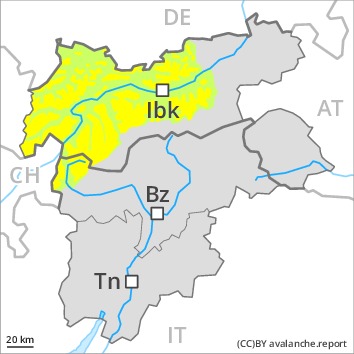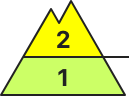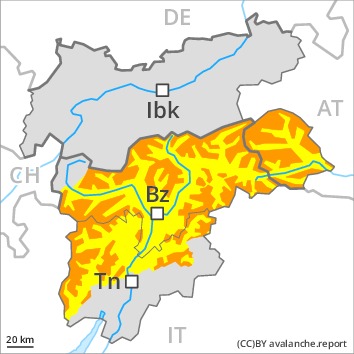
Danger level
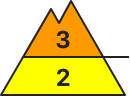 | treeline |
|  |
|  | ||||
| |
| |

Weak layers in the upper part of the snowpack necessitate caution. A treacherous avalanche situation will be encountered in some regions.
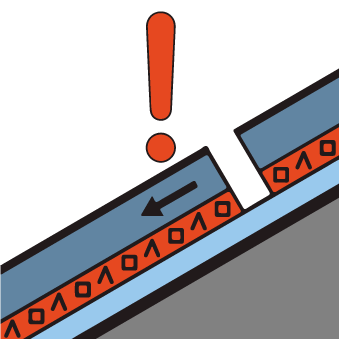
The near-surface layers of the snowpack necessitate caution and restraint. Dry avalanches can be triggered in the weakly bonded old snow and reach quite a large size. Remotely triggered avalanches are possible. Avalanche prone locations for dry avalanches are to be found on steep shady slopes, also below the tree line. The avalanche prone locations are covered with new snow and are barely recognisable, even to the trained eye. Especially places where surface hoar has been covered with snow are treacherous. Whumpfing sounds and the formation of shooting cracks when stepping on the snowpack serve as an alarm indicating the danger. Meticulous route selection is important.
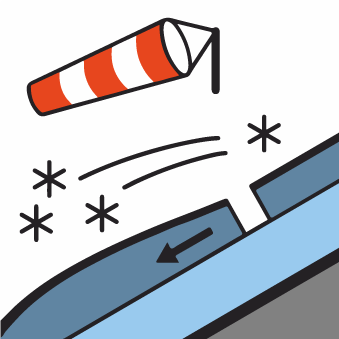
The fresh wind slabs are mostly small but prone to triggering. These avalanche prone locations are to be found above the tree line, caution is to be exercised adjacent to ridgelines and in gullies and bowls.
As a consequence of solar radiation more dry snow slides and avalanches are possible as the day progresses.
In addition a latent danger of gliding avalanches exists.
Snowpack
dp.8: surface hoar blanketed with snow
dp.4: cold following warm / warm following cold
Faceted weak layers exist in the top section of the snowpack. The somewhat older wind slabs are lying on surface hoar in some places.
As a consequence of a moderate northerly wind, soft wind slabs formed. The fresh wind slabs are lying on soft layers. As a consequence of low temperatures the snowpack can not consolidate.
Towards its base, the snowpack is well consolidated.
Tendency
A precarious avalanche situation will persist. Gradual increase in avalanche danger as a consequence of the moderate northerly wind.