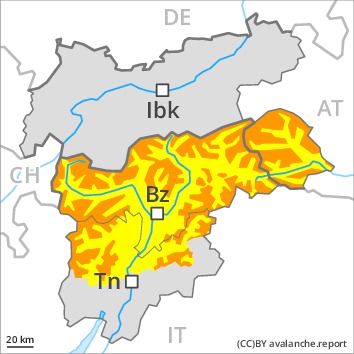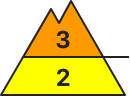
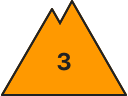
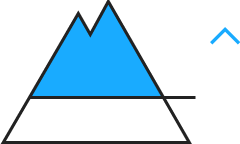
Danger level
 | treeline |
|  |
|  | ||||
|  |
| |
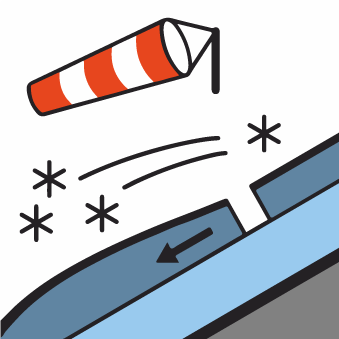
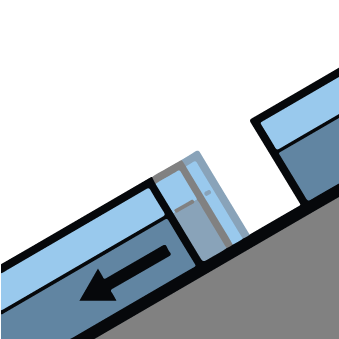

New snow and wind slabs represent the main danger. Gliding snow requires caution. Considerable avalanche danger will still be encountered.
Over a wide area 10 to 20 cm of snow, and up to 30 cm in some localities, fell on Wednesday above approximately 1000 m. The new snow and wind slabs remain very prone to triggering in all aspects above the tree line. This applies in particular on very steep slopes, and adjacent to ridgelines. Dry avalanches can be released by small loads or triggered naturally.
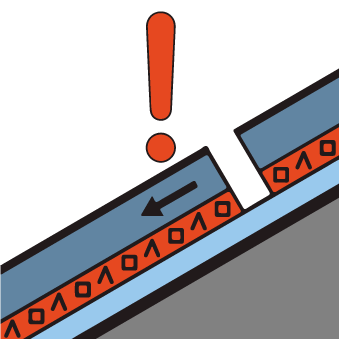
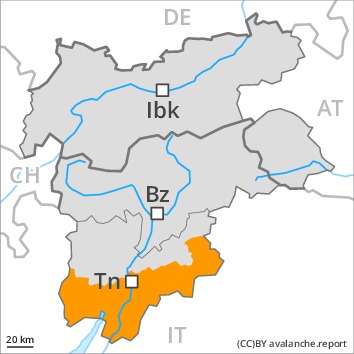
In addition a latent danger of gliding avalanches and moist snow slides exists. Until the temperature falls more medium-sized moist slab avalanches are possible. They can also penetrate deep layers and reach quite a large size, caution is to be exercised, including on cut and grassy slopes.
Extensive experience in the assessment of avalanche danger is required. Areas with glide cracks are to be avoided as far as possible.
Snowpack
dp.6: cold, loose snow and wind
dp.3: rain
As a consequence of a moderate to strong northerly wind, easily released wind slabs will form especially adjacent to ridgelines. This also applies in gullies and bowls below the tree line. Over a wide area new snow and wind slabs are lying on the smooth surface of an old snowpack, especially above approximately 1900 m.
The old snowpack is moist, in particular at low and intermediate altitudes. Faceted weak layers exist in the centre of the snowpack in particular above the tree line.
Tendency
Gradual decrease in danger of moist and wet avalanches as the temperature drops. This applies in particular below approximately 2000 m. Fresh wind slabs are to be evaluated with care and prudence.