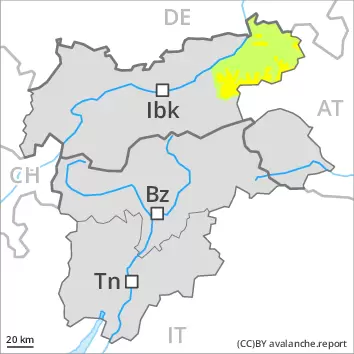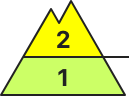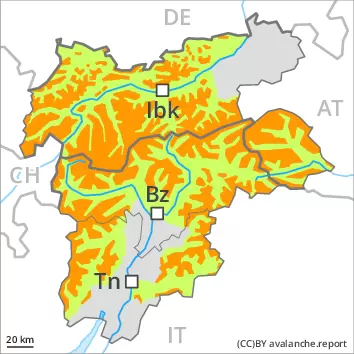
Danger level
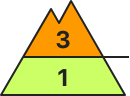 | treeline |
|  |
|  | ||||
| |
| |
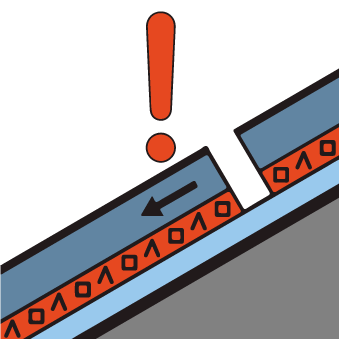
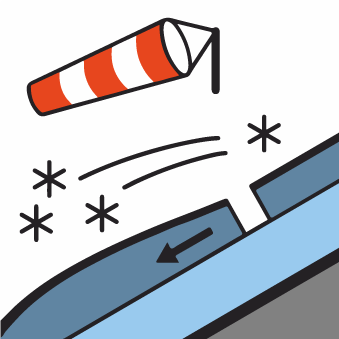

Weakly bonded old snow represents the main danger. Wind slabs are to be evaluated with care and prudence.
Weak layers in the old snowpack can be released over a wide area even by individual winter sport participants, in particular on steep shady slopes above the tree line, as well as in all aspects at elevated altitudes. Whumpfing sounds and the formation of shooting cracks when stepping on the snowpack serve as an alarm indicating the danger. Remotely triggered avalanches are possible.
The extensive wind slabs can be released by a single winter sport participant in all aspects above the tree line. The somewhat older wind slabs are covered with new snow in some cases and therefore difficult to recognise.
Mostly the avalanches are medium-sized. The number and size of avalanche prone locations will increase with altitude. Experience in the assessment of avalanche danger is required.
Snowpack
dp.5: snowfall after a long period of cold
dp.6: cold, loose snow and wind
Since Tuesday the wind has been storm force in some cases. The wind has transported the fresh and old snow significantly. In some cases the various wind slabs have bonded poorly with each other and the old snowpack.
Faceted weak layers exist in the centre of the snowpack, in particular on shady slopes above the tree line, as well as on steep sunny slopes at elevated altitudes. Whumpfing sounds and the formation of shooting cracks when stepping on the snowpack confirm the existence of a weak snowack.
Tendency
In the north and in the northwest new snow. Significant warming to the high Alpine regions. The avalanche danger will persist.