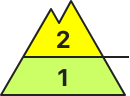
Danger level
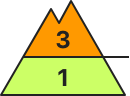 | treeline |
|  |
|  |
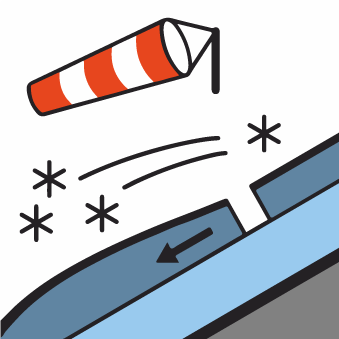

Wind slabs represent the main danger.
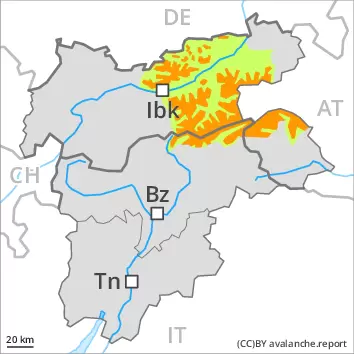
As a consequence of new snow and a storm force northerly wind, easily released wind slabs formed in the last few days in particular above the tree line, but in isolated cases also on wind-loaded slopes below the tree line. Mostly avalanches are medium-sized and can be released easily even by a single winter sport participant. The avalanche prone locations are to be found especially on wind-loaded slopes and in gullies and bowls, and behind abrupt changes in the terrain. The wind slabs are covered with new snow in some cases and therefore difficult to recognise. As a consequence of the solar radiation, the likelihood of slab avalanches being released will increase a little at elevated altitudes.
As a consequence of solar radiation, the natural activity of small and medium loose snow avalanches will increase, in particular on rocky slopes.
Backcountry touring calls for experience in the assessment of avalanche danger and caution.
Snowpack
dp.6: cold, loose snow and wind
At elevated altitudes snow depths vary greatly, depending on the infuence of the wind. The wind will be strong at times. The fresh snow and the wind slabs are lying on soft layers above the tree line, in particular in places that are protected from the wind.
In very isolated cases weak layers exist in the centre of the snowpack. This applies in particular on very steep shady slopes in particular above approximately 2400 m.
Tendency
Wind slabs are to be evaluated critically. As a consequence of mild temperatures the snow drift accumulations will stabilise during the next few days. The danger of loose snow avalanches will decrease.