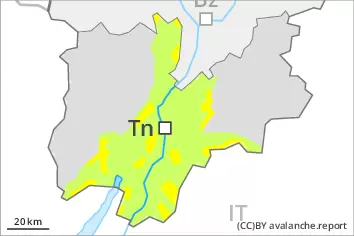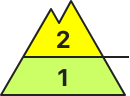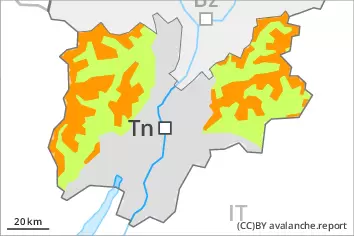
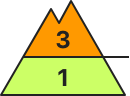
Danger level
 | treeline |
|  |
|  | ||||
| |
|  |

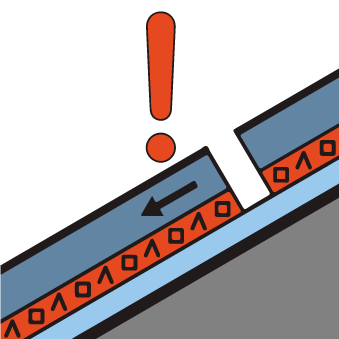

Fresh wind slabs require caution. Weakly bonded old snow above approximately 2200 m.
The new snow and wind slabs of the last few days can be released easily, even by a single winter sport participant,. Mostly avalanches are medium-sized. The avalanche prone locations are to be found in all aspects above the tree line. In steep rocky terrain mostly small dry loose snow avalanches are possible.
Additionally avalanches can also be released in the old snowpack. These avalanche prone locations are to be found on steep, little used shady slopes above approximately 2200 m and on steep sunny slopes above approximately 2500 m. They are covered with new snow and are difficult to recognise. Whumpfing sounds and the formation of shooting cracks when stepping on the snowpack indicate the danger.
Experience in the assessment of avalanche danger is recommended.
Snowpack
dp.6: cold, loose snow and wind
dp.1: deep persistent weak layer
In some regions up to 20 cm of snow has fallen since Sunday. In the west less snow fell. The new snow and wind slabs of the last few days are poorly bonded with the old snowpack in some places. As a consequence of low temperatures the snowpack can not consolidate.
As a consequence of a moderate to strong wind from northerly directions, mostly small wind slabs will form on Thursday. These are in some cases prone to triggering.
Faceted weak layers exist in the old snowpack, especially on shady slopes above approximately 2200 m, as well as on sunny slopes above approximately 2500 m. Reports filed by observers confirm the existence of a weak snowack.
Tendency
Some snow will fall on Thursday in some localities. As a consequence of low temperatures and the moderate to strong northerly wind, the snowpack can not consolidate on Thursday. The avalanche danger will persist.