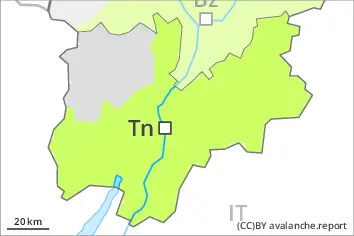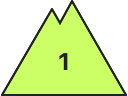
Danger level
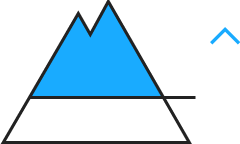
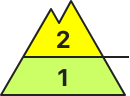 | 2200m |
|  |
|  |
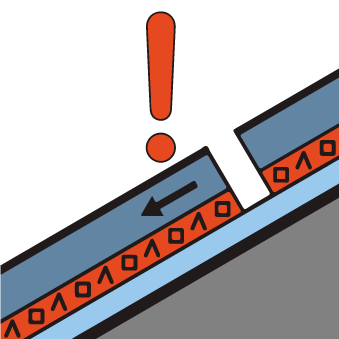

Only a little snow is lying. Weak layers in the lower part of the snowpack necessitate caution.
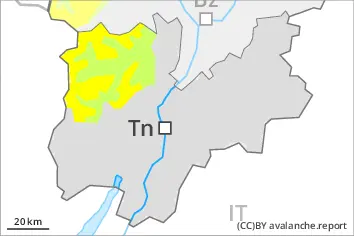
The hard wind slabs can be released by a single winter sport participant in isolated cases at high altitudes and in high Alpine regions. The avalanche prone locations are to be found in particular in gullies and bowls, and behind abrupt changes in the terrain. In particular northwest, north and east facing slopes are unfavourable. In high Alpine regions the avalanche prone locations are to be found in all aspects. Avalanches can penetrate deep layers and reach medium size in isolated cases.
Snowpack
dp.1: deep persistent weak layer
In some cases the wind slabs have bonded poorly with the old snowpack. They are lying on top of a weakly bonded old snowpack in particular on northwest to north to east facing aspects.
Steep sunny slopes: As a consequence of mild temperatures and solar radiation a crust will form on the surface. Sunshine and high temperatures will give rise as the day progresses to slight softening of the snowpack below approximately 2600 m.
The snowpack will be generally subject to considerable local variations.
Tendency
Weak layers in the old snowpack necessitate caution. These avalanche prone locations are rather rare but are barely recognisable, even to the trained eye. The old wind slabs can only be released in isolated cases.