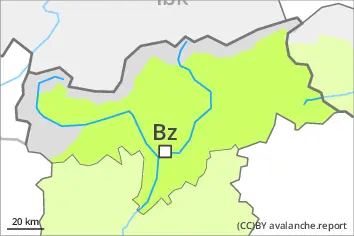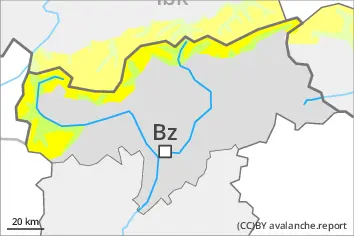
Danger level
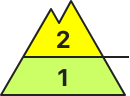 | 2200m |
|  |
|  | ||||
| |
|  |
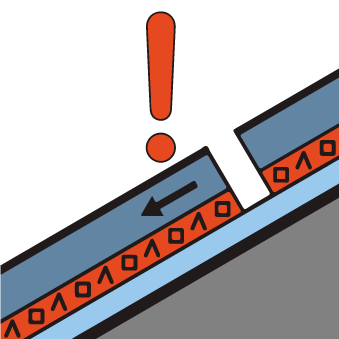
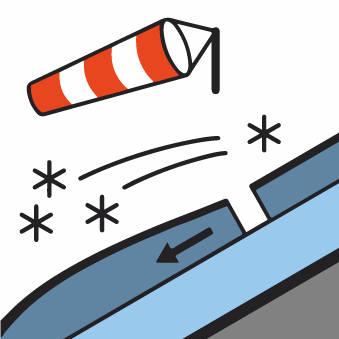

Wind slabs and weakly bonded old snow require caution.
Avalanches can in very isolated cases be released in the old snowpack. These are rather small but can be released even by a single winter sport participant. The avalanche prone locations are to be found in particular in gullies and bowls, and behind abrupt changes in the terrain. In particular northwest, north and east facing slopes are unfavourable. In high Alpine regions the avalanche prone locations are to be found in all aspects.
As a consequence of new snow and a moderate to strong northwesterly wind, clearly visible wind slabs will form. The avalanches are rather small but in some cases easily released.
Snowpack
dp.1: deep persistent weak layer
dp.6: cold, loose snow and wind
5 to 10 cm of snow, and even more in some localities, will fall.
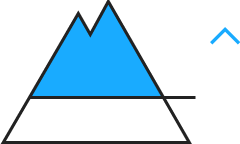
Shady slopes: Faceted weak layers exist in the bottom section of the snowpack. The snowpack will be prone to triggering in some places, in particular on northwest, north and east facing slopes at high altitude, as well as in all aspects in high Alpine regions. Hard wind slabs are lying on soft layers at elevated altitudes.
Steep sunny slopes: The snowpack consists of faceted crystals and its surface has a melt-freeze crust that is strong in many cases.
The snowpack will be generally subject to considerable local variations.
Tendency
Weak layers in the old snowpack necessitate caution. These avalanche prone locations are rather rare but are barely recognisable, even to the trained eye. Fresh wind slabs require caution.