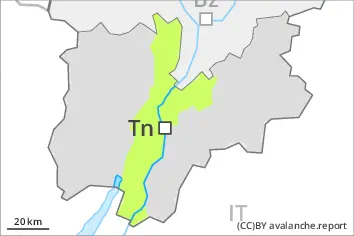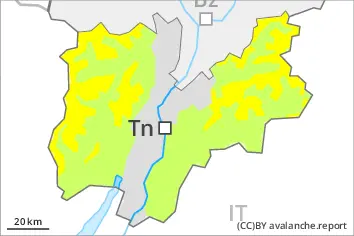
Danger level
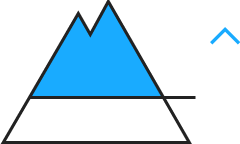
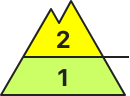 | 2400m |
|  |
|  |
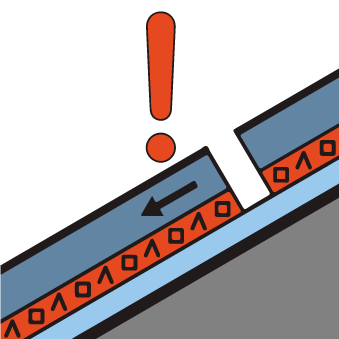

Avalanches can in isolated cases be released in the old snowpack.
Weak layers in the old snowpack can still be released in isolated cases in particular in little used terrain. The avalanche prone locations are to be found on extremely steep west, north and east facing slopes above approximately 2400 m. These avalanche prone locations are barely recognisable, even to the trained eye. Caution is to be exercised in particular at transitions from a shallow to a deep snowpack, when entering gullies and bowls for example. Avalanches can reach medium size in isolated cases. The prevalence of avalanche prone locations and likelihood of triggering will increase with altitude.
The older wind slabs can be released in isolated cases on extremely steep north and east facing slopes at elevated altitudes. Such avalanche prone locations are to be found in particular adjacent to ridgelines and in pass areas. They are clearly recognisable to the trained eye. Apart from the danger of being buried, restraint should be exercised in particular in view of the danger of avalanches sweeping people along and giving rise to falls.
Snowpack
dp.1: deep persistent weak layer
dp.6: cold, loose snow and wind
Faceted weak layers exist in the bottom section of the snowpack on west, north and east facing slopes. These can be released in isolated cases.
Sunshine and high temperatures will give rise as the day progresses to gradual softening of the snowpack on sunny slopes.
Tendency
The avalanche danger will decrease gradually.