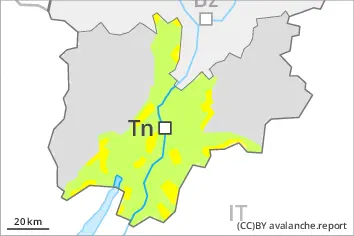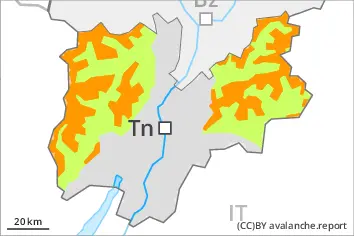
Danger level
 | treeline |
|  |
|  | ||||
| |
|  |

The current avalanche situation calls for careful route selection.
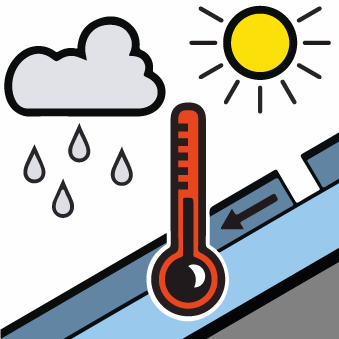
As a consequence of warming during the day, the likelihood of natural moist avalanches being released will increase gradually.
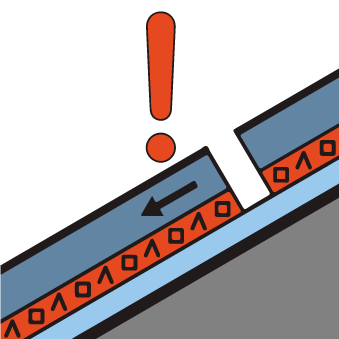
The fresh and somewhat older wind slabs can be released by a single winter sport participant in some cases.
Wind-loaded slopes where weaknesses exist in the old snowpack are unfavourable. The avalanche prone locations are to be found in particular on little used shady slopes above approximately 1800 m. Avalanche prone locations are to be found also on sunny slopes in high Alpine regions. The number and size of avalanche prone locations will increase with altitude. On very steep shady slopes the avalanches can penetrate down to the ground and reach large size.
Backcountry touring and other off-piste activities call for experience in the assessment of avalanche danger and careful route selection.
Snowpack
dp.10: springtime scenario
dp.1: deep persistent weak layer
As a consequence of sharply rising temperatures and a treacherous avalanche situation will develop. The surface of the snowpack will soften during the day. Sunshine and high temperatures will give rise as the day progresses to a loss of strength within the snowpack over a wide area in particular on very steep sunny slopes.
The old snowpack is faceted and weak; its surface consists of loosely bonded snow. Precarious weak layers exist in the centre of the old snowpack in particular on little used shady slopes.
Tendency
Increase in danger of moist avalanches as a consequence of warming during the day and solar radiation.