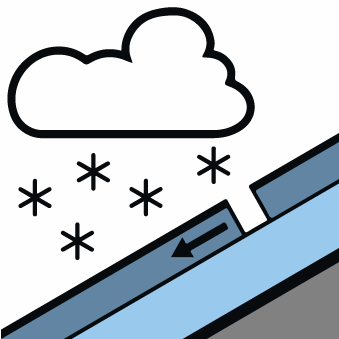
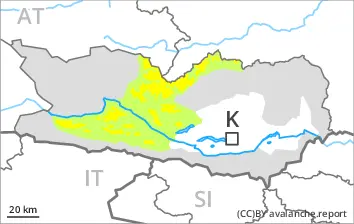
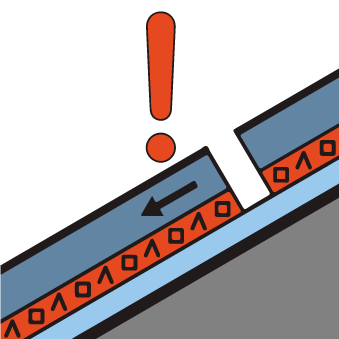
As a consequence of new snow and a moderate to strong wind from variable directions, avalanche prone wind slabs will form especially adjacent to ridgelines and in gullies and bowls. In steep gullies avalanches can in some cases reach medium size. Avalanches can to some extent be released in near-ground layers also. The soft wind slabs are covered with new snow in some cases and therefore difficult to recognise. Shooting cracks when stepping on the snowpack can indicate the danger. The Avalanche Warning Service currently has only a small amount of information that has been collected in the field, so that the avalanche danger should be investigated especially thoroughly in the relevant locality.
Snowpack
dp.6: cold, loose snow and wind dp.1: deep persistent weak layer
Over a wide area 15 to 30 cm of snow will fall above approximately 1600 m. This applies in particular along the border with Italy. The wind will be strong for a temporary period. The fresh wind slabs will be deposited on soft layers. Faceted weak layers exist in the bottom section of the old snowpack in particular in gullies and bowls.
Tendency
Wind slabs are to be evaluated with care and prudence.
Danger level
1800m
Avalanche Problem
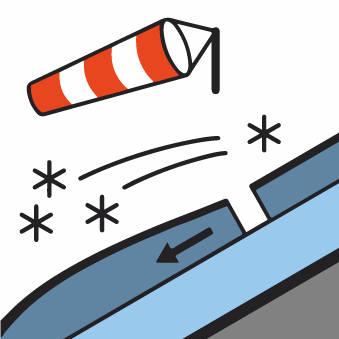
Wind slab
1800m
Fresh wind slabs require caution.
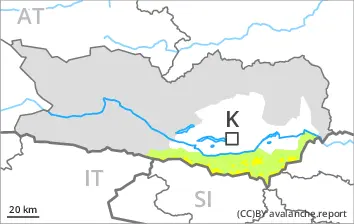
As a consequence of new snow and a moderate to strong wind from variable directions, avalanche prone wind slabs will form especially adjacent to ridgelines and in gullies and bowls. These can in some places be released by a single winter sport participant, but they will be small in most cases. The Avalanche Warning Service currently has only a small amount of information that has been collected in the field, so that the avalanche danger should be investigated especially thoroughly in the relevant locality.
Snowpack
dp.6: cold, loose snow and wind
Over a wide area 10 to 25 cm of snow will fall above approximately 1600 m. The wind will be strong at times. The fresh wind slabs will be deposited on soft layers.
Tendency
Wind slabs are to be evaluated with care and prudence.
Danger level
1800m
Avalanche Problem
New snow
1800m
The fresh wind slabs are prone to triggering.
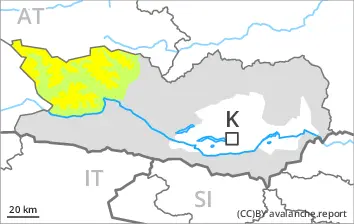
As a consequence of new snow and a moderate to strong wind from variable directions, avalanche prone wind slabs will form especially adjacent to ridgelines and in gullies and bowls. They are covered with new snow and are difficult to recognise. Avalanches can in very isolated cases be released in near-ground layers also. In steep gullies avalanches can in some cases reach medium size. Such avalanche prone locations are very rare but are barely recognisable. Shooting cracks when stepping on the snowpack can indicate the danger. The Avalanche Warning Service currently has only a small amount of information that has been collected in the field, so that the avalanche danger should be investigated especially thoroughly in the relevant locality.
Snowpack
dp.6: cold, loose snow and wind dp.1: deep persistent weak layer
Over a wide area 25 to 40 cm of snow will fall above approximately 1600 m. The wind will transport the new snow. The fresh wind slabs will be deposited on soft layers. Faceted weak layers exist in the bottom section of the old snowpack in gullies and bowls.
Tendency
Wind slabs are to be evaluated with care and prudence.
Danger level
1800m
Avalanche Problem
Wind slab
1800m
Persistent weak layer
2600m
The fresh wind slabs are prone to triggering.
As a consequence of new snow and a moderate to strong wind from variable directions, avalanche prone wind slabs will form especially adjacent to ridgelines and in gullies and bowls. These can in some places be released easily and reach medium size. Avalanches can to some extent be released in near-ground layers also. This applies in particular on west, north and east facing slopes in gullies and bowls above approximately 2600 m. Shooting cracks when stepping on the snowpack can indicate the danger. The Avalanche Warning Service currently has only a small amount of information that has been collected in the field, so that the avalanche danger should be investigated especially thoroughly in the relevant locality.
Snowpack
dp.6: cold, loose snow and wind dp.1: deep persistent weak layer
Over a wide area 10 to 25 cm of snow will fall above approximately 1600 m. The wind will be strong at times. The fresh wind slabs will be deposited on soft layers. Faceted weak layers exist in the bottom section of the old snowpack in particular in gullies and bowls. This applies especially on west, north and east facing slopes above approximately 2600 m.
Tendency
Wind slabs are to be evaluated with care and prudence.