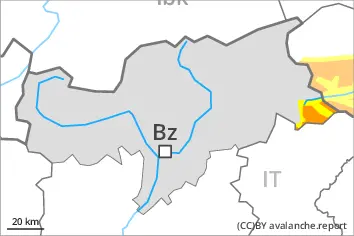
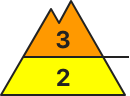
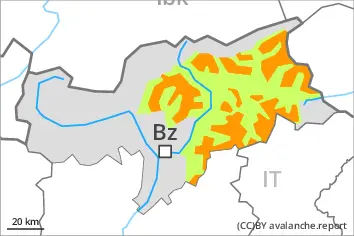
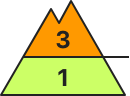
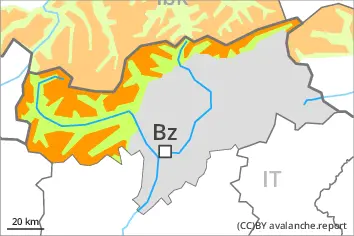
The snow sport conditions outside marked and open pistes are precarious. The avalanche danger is within the uppermost range of danger level 3 (considerable).
Avalanches can in many places be released in the old snowpack. In isolated cases these are large and can be released easily even by a single winter sport participant. As a consequence of warming, the likelihood of avalanches being released will increase. Caution is to be exercised in particular on west, north and east facing slopes above approximately 1800 m. Remotely triggered avalanches are probable. Individual natural avalanches are still not ruled out.
The avalanche prone locations are prevalent and are barely recognisable. Whumpfing sounds and the formation of shooting cracks when stepping on the snowpack are a clear indication of a weakly bonded snowpack.
Mostly small loose snow avalanches are possible as a consequence of warming during the day and solar radiation. Individual gliding avalanches can also occur.
Snowpack
dp.1: deep persistent weak layer dp.8: surface hoar blanketed with snow
In some localities up to 50 cm of snow has fallen since Tuesday. Some snow will fall. The new snow is lying on top of a weakly bonded old snowpack in particular on west, north and east facing slopes above approximately 1800 m. Distinct weak layers exist in the old snowpack.
Tendency
Avalanches can as before be released, even by a single winter sport participant. The snowpack remains prone to triggering.
Danger level
treeline
Avalanche Problem
Persistent weak layer
Treeline
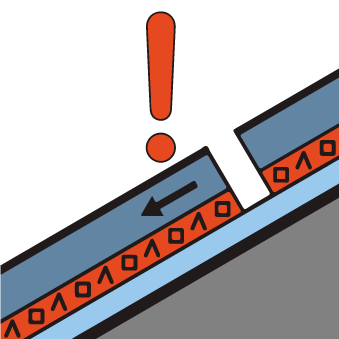
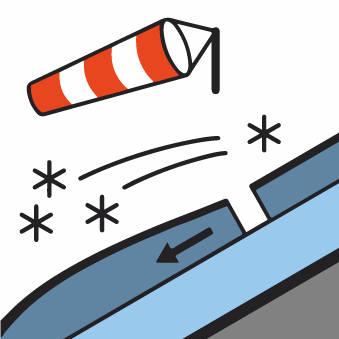
Wind slab
Treeline
A treacherous avalanche situation will prevail. Wind slabs and weakly bonded old snow require caution.
Distinct weak layers in the lower part of the snowpack can be released easily by individual winter sport participants. In addition the fresh wind slabs are very easily triggered. Avalanches can release the weakly bonded old snow as well and reach medium size. Caution is to be exercised in particular on steep west, north and east facing slopes above the tree line.
Whumpfing sounds and the formation of shooting cracks when stepping on the snowpack and natural avalanches serve as an alarm indicating the danger. The avalanche prone locations are sometimes covered with new snow and are therefore difficult to recognise. Remotely triggered avalanches are possible. Caution and restraint are recommended.
Snowpack
dp.1: deep persistent weak layer dp.8: surface hoar blanketed with snow
In some regions 15 to 25 cm of snow has fallen since Tuesday. Some snow will fall. The new snow and wind slabs are lying on the unfavourable surface of an old snowpack. Distinct weak layers exist in the old snowpack. This applies especially on west, north and east facing slopes.
Tendency
The avalanche conditions remain treacherous.
Danger level
treeline
Avalanche Problem
Persistent weak layer
Treeline
Wind slab
Treeline
A treacherous avalanche situation will prevail. Wind slabs and weakly bonded old snow require caution.
Distinct weak layers in the lower part of the snowpack can be released easily by individual winter sport participants. In addition the fresh wind slabs are very easily triggered. Avalanches can release the weakly bonded old snow as well and reach medium size. Caution is to be exercised in particular on steep west, north and east facing slopes above the tree line.
Whumpfing sounds and the formation of shooting cracks when stepping on the snowpack and natural avalanches serve as an alarm indicating the danger. The avalanche prone locations are sometimes covered with new snow and are therefore difficult to recognise. Remotely triggered avalanches are possible. Individual natural avalanches are not entirely ruled out.
Caution and restraint are recommended.
Snowpack
dp.1: deep persistent weak layer dp.8: surface hoar blanketed with snow
In some regions 15 to 25 cm of snow has fallen since Tuesday. This applies in particular on the Main Alpine Ridge and to the south. Up to 10 cm of snow will fall. The new snow and wind slabs will be deposited on the unfavourable surface of an old snowpack. Distinct weak layers exist in the old snowpack. This applies especially on west, north and east facing slopes.
Tendency
The avalanche conditions remain treacherous.
Danger level
treeline
Avalanche Problem
Wind slab
Treeline
Fresh wind slabs require caution.
The fresh wind slabs can be released easily in some cases. This applies especially on steep shady slopes, as well as adjacent to ridgelines and in gullies and bowls above the tree line. In isolated cases avalanches are medium-sized. The avalanche prone locations are sometimes covered with new snow and are therefore difficult to recognise.
Apart from the danger of being buried, restraint should be exercised in particular in view of the danger of avalanches sweeping people along and giving rise to falls.
Snowpack
dp.6: cold, loose snow and wind
The fresh wind slabs will be deposited on the unfavourable surface of an old snowpack at elevated altitudes. The old snowpack consists of faceted crystals.
The snowpack will be generally subject to considerable local variations.
Tendency
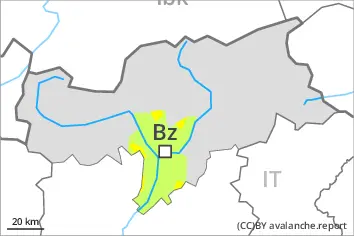
Moderate avalanche danger will prevail. Fresh wind slabs require caution.