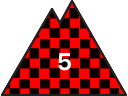
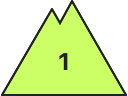
Dry and moist avalanches can in many cases penetrate deep layers and reach extremely large size in isolated cases.
Weakly bonded old snow on steep shady slopes. Distinct weak layers in the upper part of the snowpack can be released in isolated cases even by individual winter sport participants on steep shady slopes. This applies in particular in little used terrain as well as in areas where the snow cover is rather shallow above approximately 2300 m. Avalanches can penetrate even deep layers and reach a dangerous size. Distinct weak layers in the old snowpack necessitate defensive route selection. Isolated whumpfing sounds can indicate the danger.
Weakly bonded old snow on steep shady slopes. Distinct weak layers in the upper part of the snowpack can be released in isolated cases even by individual winter sport participants on steep shady slopes. This applies in particular in little used terrain as well as in areas where the snow cover is rather shallow above approximately 2300 m. Avalanches can penetrate even deep layers and reach a dangerous size. Distinct weak layers in the old snowpack necessitate defensive route selection. Isolated whumpfing sounds can indicate the danger.
Snowpack
dp.7: snow-poor zones in snow-rich surrounding dp.10: springtime scenario
As a consequence of the strong to storm force southerly foehn wind, fresh snow drift accumulations will form. In some cases the various wind slabs have bonded poorly with each other and the old snowpack. They can be released easily especially at their margins. The wind slabs of the last two days are lying on surface hoar in some places in areas close to the tree line. In addition further wind slabs formed adjacent to ridgelines in all aspects and generally in the high Alpine regions. Reports filed by observers and stability tests confirm that the stability of the snowpack varies greatly within a small area on wind-loaded slopes.
Tendency
The peak of avalanche activity is expected from the second half of the night probably, but already earlier on shady slopes.
Danger level
treeline
Since the early morning the wind has been strong adjacent to ridgelines over a wide area. The sometimes strong wind will transport the old snow. As the day progresses the previously small wind slabs will increase in size once again. As a consequence of a gathering storm force wind from northwesterly directions, large surface-area wind slabs will form since Monday especially adjacent to ridgelines as well as above the tree line. The avalanche prone locations are to be found in particular on wind-loaded slopes of all aspects above approximately 2200 m and at transitions from a shallow to a deep snowpack. The fresh wind slabs are to be found in particular adjacent to ridgelines and in gullies and bowls. Over a wide area avalanche prone wind slabs will form. The sometimes large wind slabs can be released easily, even by a single winter sport participant, especially on east to south to southwest facing aspects above the tree line. This applies in particular at their margins.
Since the early morning the wind has been strong adjacent to ridgelines over a wide area. The sometimes strong wind will transport the old snow. As the day progresses the previously small wind slabs will increase in size once again. As a consequence of a gathering storm force wind from northwesterly directions, large surface-area wind slabs will form since Monday especially adjacent to ridgelines as well as above the tree line. The avalanche prone locations are to be found in particular on wind-loaded slopes of all aspects above approximately 2200 m and at transitions from a shallow to a deep snowpack. The fresh wind slabs are to be found in particular adjacent to ridgelines and in gullies and bowls. Over a wide area avalanche prone wind slabs will form. The sometimes large wind slabs can be released easily, even by a single winter sport participant, especially on east to south to southwest facing aspects above the tree line. This applies in particular at their margins.
Snowpack
dp.8: surface hoar blanketed with snow dp.9: graupel blanketed with snow
The old snowpack will be prone to triggering in some places. This applies in particular on steep shady slopes above approximately 2000 m. Towards its surface, the snowpack is unfavourably layered and its surface consists of loosely bonded snow lying on a melt-freeze crust that is barely capable of bearing a load. Towards its base, the snowpack is faceted and weak. Remotely triggered avalanches are possible in isolated cases. Reports filed by observers and field observations confirm the unfavourable bonding of the snowpack on steep shady slopes. The meteorological conditions will foster a substantial weakening of the near-surface layers. The snowpack will be prone to triggering in the northeast and in the northwest.
Tendency
Significant increase in danger as a consequence of the snowfall.