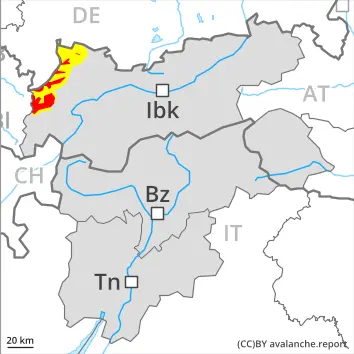
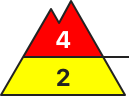
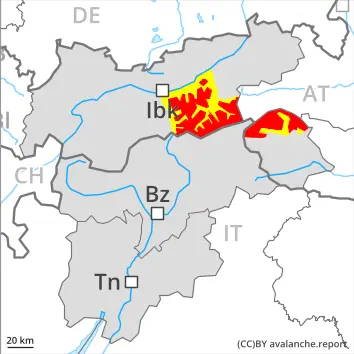
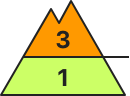
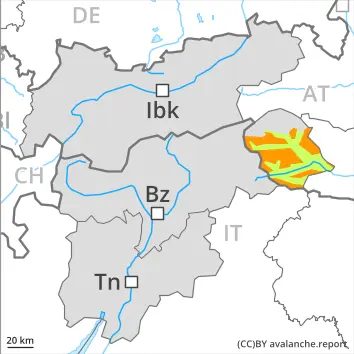
For those venturing off piste a dangerous avalanche situation will be encountered over a wide area.
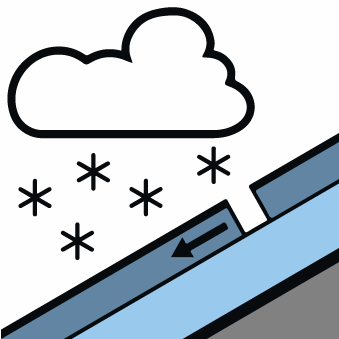
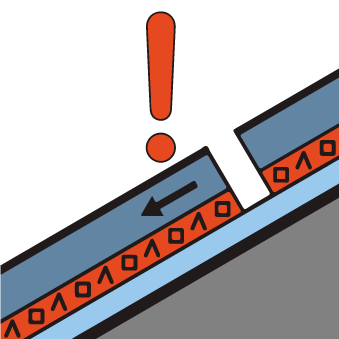
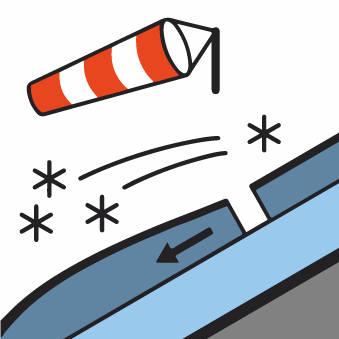
The large quantity of fresh snow and the sometimes large wind slabs that are forming in all aspects can be released easily or naturally above the tree line. Avalanches can be triggered in near-surface layers and reach large size in isolated cases. Additionally in some places avalanches can penetrate near-ground layers of the snowpack and reach large size on west, north and east facing slopes, especially above approximately 2200 m. The danger exists primarily in alpine snow sports terrain.
In addition dry loose snow avalanches are possible, especially on extremely steep slopes.
Snowpack
dp.6: cold, loose snow and wind dp.1: deep persistent weak layer
30 to 40 cm of snow has fallen since the late morning. 20 to 30 cm of snow will fall in the next few hours. The wind will be strong to storm force. The wind will transport the new snow significantly. Deep wind slabs will form.
The new snow and wind slabs are lying on the unfavourable surface of an old snowpack above the tree line. The old snowpack will be weakly bonded, especially on west, north and east facing slopes above approximately 2200 m, and on south facing slopes in high Alpine regions.
Tendency
As a consequence of a moderate to strong wind from northerly directions, further wind slabs will form.
Avalanches can as before be released easily.
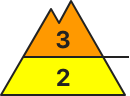
Danger level
treeline
Avalanche Problem
New snow
Treeline
Persistent weak layer
2200m
New snow
Treeline
Natural avalanches are to be expected.
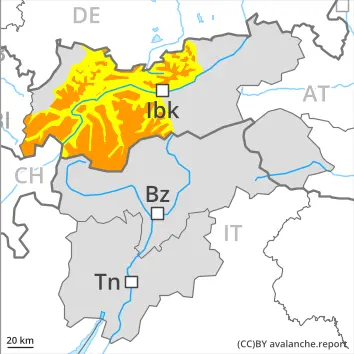
For those venturing off piste a dangerous avalanche situation will be encountered over a wide area.
The large quantity of fresh snow and the sometimes large wind slabs that are forming in all aspects can be released easily or naturally above the tree line. Avalanches can be triggered in near-surface layers and reach large size in isolated cases. Additionally in some places avalanches can penetrate near-ground layers of the snowpack, especially on west, north and east facing slopes above approximately 2200 m. The danger exists primarily in alpine snow sports terrain.
In addition dry loose snow avalanches are possible, especially on extremely steep slopes.
Snowpack
dp.6: cold, loose snow and wind dp.1: deep persistent weak layer
20 to 30 cm of snow, and even more in some localities, fell in the past few hours. 20 to 30 cm of snow, and even more in some localities, will fall until the afternoon. The wind will be storm force. The wind will transport the new snow significantly. Deep wind slabs will form.
The new snow and wind slabs are lying on the unfavourable surface of an old snowpack above the tree line. The old snowpack will be weakly bonded, especially on west, north and east facing slopes above approximately 2200 m, and on south facing slopes at elevated altitudes.
Tendency
As a consequence of a moderate to strong wind from northerly directions, further wind slabs will form.
Avalanches can as before be released easily.
Danger level
treeline
Avalanche Problem
New snow
Treeline
Persistent weak layer
2200m
New snow
Treeline
Natural avalanches are to be expected.
For those venturing off piste a dangerous avalanche situation will be encountered over a wide area.
The large quantity of fresh snow and the sometimes large wind slabs that are forming in all aspects can be released easily or naturally above the tree line. Avalanches can be triggered in near-surface layers and reach medium size. Additionally in some places avalanches can penetrate near-ground layers of the snowpack and reach large size on west, north and east facing slopes, especially above approximately 2200 m. The danger exists primarily in alpine snow sports terrain.
In addition dry loose snow avalanches are possible, especially on extremely steep slopes.
Snowpack
dp.6: cold, loose snow and wind dp.1: deep persistent weak layer
25 to 50 cm of snow, and even more in some localities, will fall. The wind will be strong to storm force. The wind will transport the new snow significantly. Deep wind slabs will form.
The new snow and wind slabs will be deposited on the unfavourable surface of an old snowpack above the tree line. The old snowpack will be weakly bonded, especially on west, north and east facing slopes above approximately 2200 m, and on south facing slopes in high Alpine regions.
Tendency
As a consequence of a moderate to strong wind from northerly directions, further wind slabs will form.
Avalanches can as before be released easily.
Danger level
treeline
Avalanche Problem
New snow
Treeline
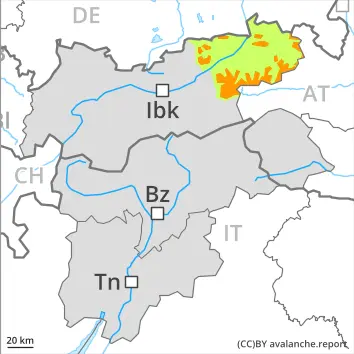
For those venturing off piste a sometimes precarious avalanche situation will prevail.
The large quantity of fresh snow and the extensive wind slabs that are forming in all aspects can be released easily or naturally above the tree line. Avalanches can be triggered in near-surface layers and reach medium size. Additionally in isolated cases avalanches can penetrate near-ground layers of the snowpack, especially on shady slopes.
Snowpack
dp.6: cold, loose snow and wind dp.1: deep persistent weak layer
40 to 60 cm of snow, and even more in some localities, will fall. The wind will be strong to storm force. The wind will transport the new snow significantly. Deep wind slabs will form.
The new snow and wind slabs will be deposited on soft layers above the tree line, especially on northwest, north and northeast facing slopes. Isolated avalanche prone weak layers exist in the bottom section of the old snowpack.
Tendency
As a consequence of a sometimes storm force wind from northerly directions, further wind slabs will form.
Avalanches can be released easily.
Danger level
treeline
Avalanche Problem
Wind slab
Treeline
Persistent weak layer
2200m
A sometimes precarious avalanche situation will prevail.
Wind slabs are prone to triggering in all aspects above the tree line. These can be released in near-surface layers. Avalanches can in isolated cases penetrate near-ground layers of the snowpack and reach medium size on west, north and east facing slopes. Natural avalanches are possible. This applies especially at the base of rock walls and behind abrupt changes in the terrain.
Snowpack
dp.6: cold, loose snow and wind dp.1: deep persistent weak layer
10 to 20 cm of snow, and even more in some localities, has fallen. The wind will be strong to storm force. The northwesterly wind will transport the new snow. Further wind slabs will form.
The new snow and wind slabs are lying on the unfavourable surface of an old snowpack above the tree line. The old snowpack will be weakly bonded, especially on west, north and east facing slopes above approximately 2200 m, and on south facing slopes at elevated altitudes.
Tendency
As a consequence of a sometimes storm force wind from northerly directions, further wind slabs will form.