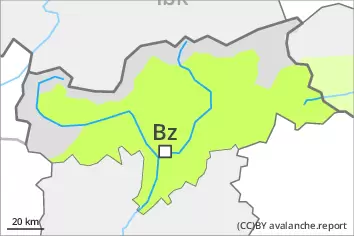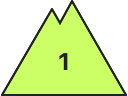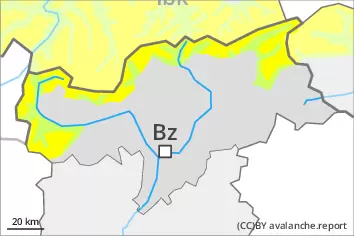
Danger level
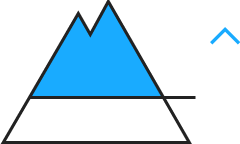
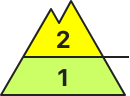 | 2600m |
|  |
|  | ||||
| |
|  |
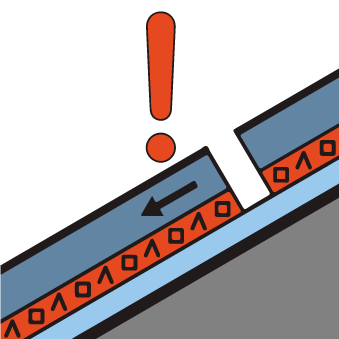


Weakly bonded old snow represents the main danger. Wind slabs at elevated altitudes.
Avalanches can be released in near-surface layers, even by small loads in isolated cases, especially on very steep north, northeast and east facing slopes between approximately 2700 and 3100 m, but in isolated cases also on very steep sunny slopes above approximately 2600 m. On the Main Alpine Ridge such avalanche prone locations are more prevalent. Mostly avalanches are medium-sized.
In addition the fresh and older wind slabs adjacent to ridgelines and at elevated altitudes are capable of being triggered in some locations. They are to be evaluated with care and prudence in particular in very steep terrain.
Snowpack
dp.4: cold following warm / warm following cold
dp.6: cold, loose snow and wind
Faceted weak layers exist in the top section of the snowpack, especially on north, northeast and east facing slopes between approximately 2700 and 3100 m, as well as on sunny slopes at elevated altitudes.
As a consequence of the moderate to strong wind, fresh snow drift accumulations formed during the last few days. These are lying on soft layers in particular on very steep shady slopes at elevated altitudes.
Some snow will fall in some regions.
Tendency
Weakly bonded old snow at high altitude. As a consequence of new snow and wind, sometimes avalanche prone wind slabs will form at elevated altitudes.