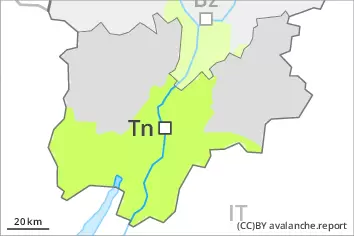
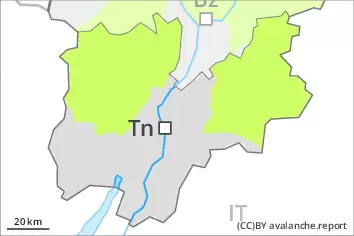
The avalanche prone locations are to be found especially on extremely steep slopes above approximately 2600 m and in gullies and bowls. The wind slabs can be released in isolated cases, but mostly only by large additional loads,.
Snowpack
The snowpack will be generally well bonded. The surface of the snowpack has frozen to form a strong crust and will hardly soften at all. In all aspects in all altitude zones only a small amount of snow is lying for the time of year. Below approximately 2000 m from a snow sport perspective, in most cases insufficient snow is lying.
Tendency
The danger will persist.
Danger level
2600m
Avalanche Problem
Wind slab
2600m
A generally favourable avalanche situation will prevail.
The old wind slabs can only be released in isolated cases. They are to be evaluated with care and prudence in extremely steep terrain. Such avalanche prone locations are rather rare and are clearly recognisable to the trained eye. Even a small avalanche can sweep winter sport participants along and give rise to falls. As a consequence of warming, the likelihood of moist snow slides being released will increase a little.
Snowpack
dp.6: cold, loose snow and wind
Hardly any weak layers exist in the snowpack. The old wind slabs are now only very rarely prone to triggering. Individual avalanche prone locations are to be found on extremely steep shady slopes at elevated altitudes. The surface of the snowpack will cool hardly at all during the overcast night. The weather conditions will give rise to slight softening of the snowpack. Only a small amount of snow is lying for the time of year.
Tendency
Some snow will fall on Wednesday. Slight increase in danger of dry avalanches at elevated altitudes.