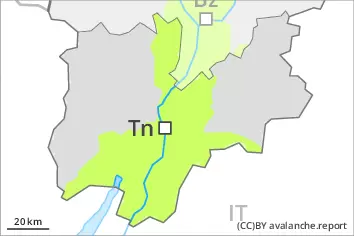
Danger level
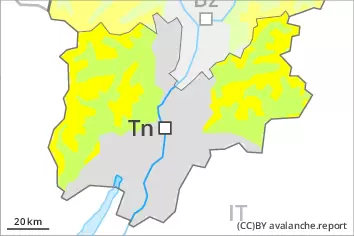
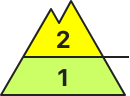 | 2200m |
|  |
|  |
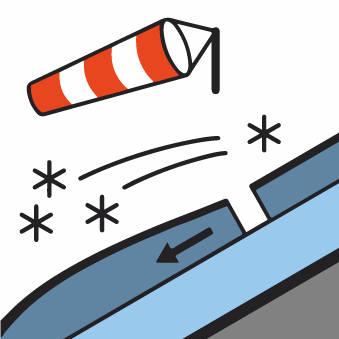

Wind slabs represent the main danger.
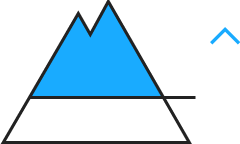
Fresh and somewhat older wind slabs can be released by a single winter sport participant on very steep shady slopes above approximately 2200 m. Avalanches can reach medium size. In high Alpine regions the avalanche prone locations are a little more prevalent and exist in all aspects. This also applies in the regions neighbouring those that are subject to danger level 3 (considerable) on the Main Alpine Ridge and in the Ortler Range. Avalanche prone locations are to be found in gullies and bowls, and behind abrupt changes in the terrain. The wind slabs are to be bypassed as far as possible.
As a consequence of solar radiation only isolated mostly small loose snow avalanches are possible, especially on extremely steep sunny slopes. In addition in particular in the regions exposed to heavier precipitation, individual small gliding avalanches are possible.
Snowpack
dp.6: cold, loose snow and wind
dp.2: gliding snow
The snowpack will be prone to triggering in some places. As a consequence of a sometimes strong wind from northerly directions, extensive wind slabs formed in the last few days especially in the regions exposed to the foehn wind. In some cases the various wind slabs have bonded still only poorly together, in particular on shady slopes above approximately 2200 m.
In very isolated cases weak layers exist in the old snowpack on very steep shady slopes. This applies in particular on the Main Alpine Ridge.
Tendency
The danger of dry avalanches will decrease gradually. The somewhat older wind slabs are in individual cases still prone to triggering at elevated altitudes.