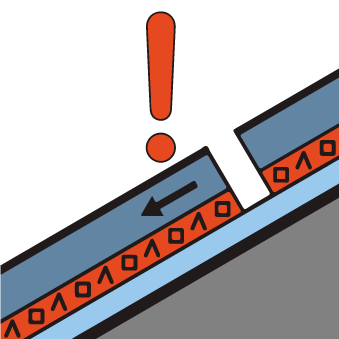
The fresh and older wind slabs can be released in isolated cases in particular on steep shady slopes above approximately 2000 m. Such avalanche prone locations are easy to recognise. Caution is to be exercised in particular adjacent to ridgelines. Mostly avalanches are small. Apart from the danger of being buried, restraint should be exercised in particular in view of the danger of avalanches sweeping people along and giving rise to falls.
Snowpack
dp.6: cold, loose snow and wind
The fresh and older wind slabs are lying on the unfavourable surface of an old snowpack in particular on wind-protected shady slopes.
The snowpack will be subject to considerable local variations. Less snow than usual is lying in all altitude zones.
Tendency
As a consequence of the occasionally strong northerly wind, fresh snow drift accumulations will form. The avalanche prone locations are to be found in particular on very steep shady slopes at elevated altitudes.
Danger level
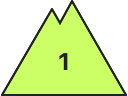
Low avalanche danger will prevail.
Avalanches can scarcely be released. Very isolated avalanche prone locations are to be found on extremely steep shady slopes at elevated altitudes.
Apart from the danger of being buried, restraint should be exercised in particular in view of the danger of avalanches sweeping people along and giving rise to falls.
Snowpack
Faceted weak layers exist in the bottom section of the snowpack on shady slopes, in particular above approximately 2600 m.
The snowpack will be subject to considerable local variations. Less snow than usual is lying in all altitude zones.
Tendency
Low avalanche danger will prevail.
Danger level
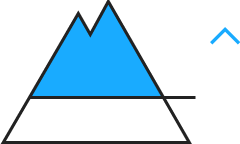
2400m
Avalanche Problem
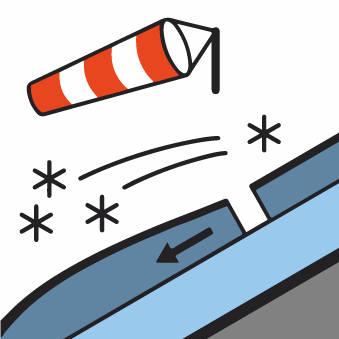
Wind slab
2400m
Low avalanche danger will be encountered over a wide area.
The fresh and older wind slabs are in isolated cases prone to triggering in particular on steep shady slopes above approximately 2400 m. This applies especially adjacent to ridgelines. The avalanche prone locations are easy to recognise. The prevalence of the avalanche prone locations will increase with altitude. In the south these avalanche prone locations are a little more prevalent.
In isolated cases avalanches can be triggered in the weakly bonded old snow. Such avalanche prone locations are to be found in particular on extremely steep shady slopes above approximately 2600 m.
Mostly avalanches are small.
Apart from the danger of being buried, restraint should be exercised in particular in view of the danger of avalanches sweeping people along and giving rise to falls.
Snowpack
dp.6: cold, loose snow and wind
As a consequence of the occasionally strong northerly wind, fresh snow drift accumulations formed on Sunday. The fresh and older wind slabs are lying on soft layers in particular on shady slopes at elevated altitudes.
Shady slopes above approximately 2600 m: Faceted weak layers exist in the bottom section of the snowpack.
The snowpack will be generally subject to considerable local variations. Hardly any snow is lying on south facing slopes. Less snow than usual is lying in all altitude zones.
Tendency
As a consequence of the occasionally strong northerly wind, fresh snow drift accumulations will form. The avalanche prone locations are to be found in particular on very steep shady slopes at elevated altitudes.
Danger level
2000m
Avalanche Problem
Persistent weak layer
2000m
Wind slabs and weakly bonded old snow require caution.
Avalanches can in isolated cases penetrate deep layers and reach medium size. Such avalanche prone locations are to be found in particular on extremely steep shady slopes above approximately 2000 m.
The older wind slabs can still in isolated cases be released by a single winter sport participant, but they will be small in most cases.
Apart from the danger of being buried, restraint should be exercised as well in view of the danger of avalanches sweeping people along and giving rise to falls, especially at elevated altitudes.
Snowpack
dp.1: deep persistent weak layer
The somewhat older wind slabs are lying on the unfavourable surface of an old snowpack. The old snowpack will be subject to considerable local variations. Faceted weak layers exist in the bottom section of the snowpack.
The snowpack will be generally subject to considerable local variations. Only a small amount of snow is lying for the time of year in all altitude zones.
Tendency
The conditions will foster a gradual stabilisation of the snow drift accumulations.