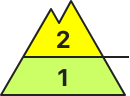
Danger level
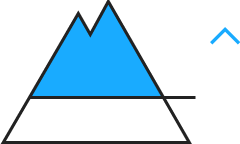
 | treeline |
|  |
|  |
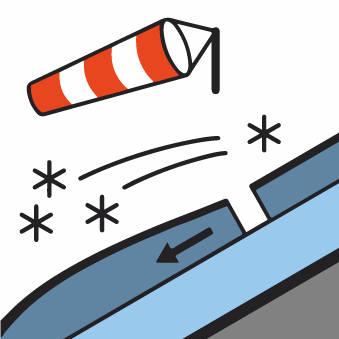

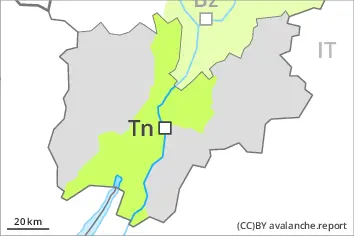
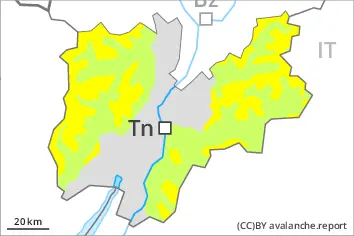
The wind slabs represent the main danger.
In all aspects precarious wind slabs formed. This applies especially adjacent to ridgelines and in gullies and bowls. The avalanche prone locations are rather rare and are clearly recognisable to the trained eye. The wind slabs can be released easily above approximately 2000 m. Caution is to be exercised at their margins in particular.
In isolated cases avalanches can be triggered in the weakly bonded old snow. In very isolated cases avalanches are medium-sized.
Apart from the danger of being buried, restraint should be exercised as well in view of the danger of avalanches sweeping people along and giving rise to falls.
Snowpack
dp.6: cold, loose snow and wind
dp.7: snow-poor zones in snow-rich surrounding
The avalanche-prone wind slabs are lying on soft layers in particular on shady slopes at elevated altitudes. The wind slabs have bonded poorly with the old snowpack.
Faceted weak layers exist in the bottom section of the old snowpack in particular on wind-protected shady slopes.
The snowpack will be generally subject to considerable local variations.
Over a wide area a little snow is lying.
Tendency
The avalanche danger will persist.