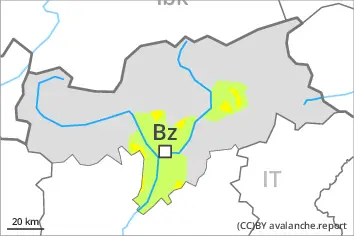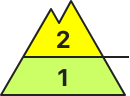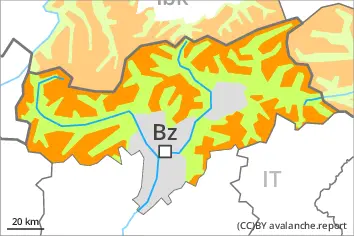
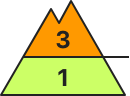
Danger level
 | treeline |
|  |
|  | ||||
| |
|  |
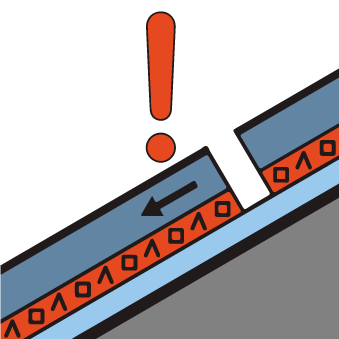


In little used terrain a sometimes treacherous avalanche situation will prevail. Wind slabs and weakly bonded old snow require caution.
Distinct weak layers in the old snowpack can be released easily by individual winter sport participants especially in little used terrain. Mostly they are medium-sized. Caution is to be exercised in particular on steep west, north and east facing slopes above the tree line. The avalanche prone locations are difficult to recognise. Whumpfing sounds and the formation of shooting cracks when stepping on the snowpack serve as an alarm indicating the danger. Remotely triggered avalanches are possible in isolated cases.
As a consequence of the strong wind, fresh snow drift accumulations formed during the last few days, in particular in gullies and bowls, and behind abrupt changes in the terrain above approximately 2200 m. The soft wind slabs are only small but in some cases prone to triggering. They are clearly recognisable to the trained eye.
Snowpack
dp.1: deep persistent weak layer
dp.8: surface hoar blanketed with snow
As a consequence of a strong wind from westerly directions, mostly small wind slabs formed in the last few days especially in gullies and bowls. The wind slabs are lying on surface hoar in some places.
Above the tree line: The snowpack will be prone to triggering. Distinct weak layers exist in the old snowpack. This applies in particular on west, north and east facing slopes.
Below the tree line as well as steep sunny slopes: The snowpack is moist and its surface has a crust that is barely capable of bearing a load.
Tendency
Weak layers in the old snowpack represent the main danger.
Some snow will fall until Sunday in particular in the north. The mostly small wind slabs of the last few days will be covered with new snow in some cases and therefore difficult to recognise. As a consequence of a strong northerly foehn wind, further wind slabs will form in the south.