Backcountry touring and other off-piste activities call for great restraint.
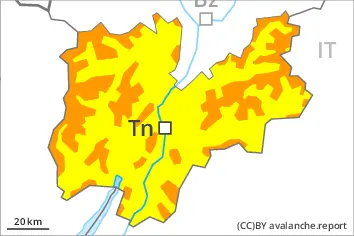
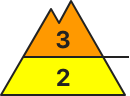
The new snow and wind slabs represent the main danger. Outside marked and open pistes a very precarious avalanche situation will be encountered over a wide area.
The sometimes storm force wind has transported a lot of snow. Above the tree line avalanche prone wind slabs formed, especially adjacent to ridgelines and in pass areas in all altitude zones, as well as in gullies and bowls, and behind abrupt changes in the terrain at elevated altitudes. On very steep sunny slopes medium-sized natural avalanches must be expected. In some places the avalanches can penetrate down to the ground and reach large size. Mostly the dry avalanches are medium-sized and can be released by a single winter sport participant. Remotely triggered avalanches are possible. Whumpfing sounds and the formation of shooting cracks when stepping on the snowpack serve as an alarm indicating the danger. The avalanche prone locations are prevalent and are barely recognisable, even to the trained eye. Backcountry touring calls for meticulous route selection.
Snowpack
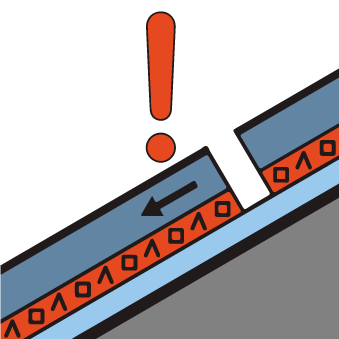
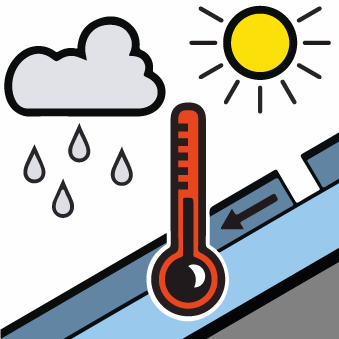
dp.6: cold, loose snow and wind dp.1: deep persistent weak layer
Over a wide area over a wide area 20 to 40 cm of snow, and up to 50 cm in some localities, has fallen since Thursday. The new snow and wind slabs are lying on top of a weakly bonded old snowpack in particular on steep shady slopes above the tree line. Distinct weak layers exist in the bottom section of the old snowpack. The meteorological conditions will foster a gradual weakening of the snowpack on sunny slopes. The snowpack remains unstable over a wide area, especially adjacent to ridgelines and in pass areas in all altitude zones, as well as in gullies and bowls, and behind abrupt changes in the terrain at elevated altitudes.
Tendency
The snowpack remains prone to triggering over a wide area. The avalanche danger will persist.